


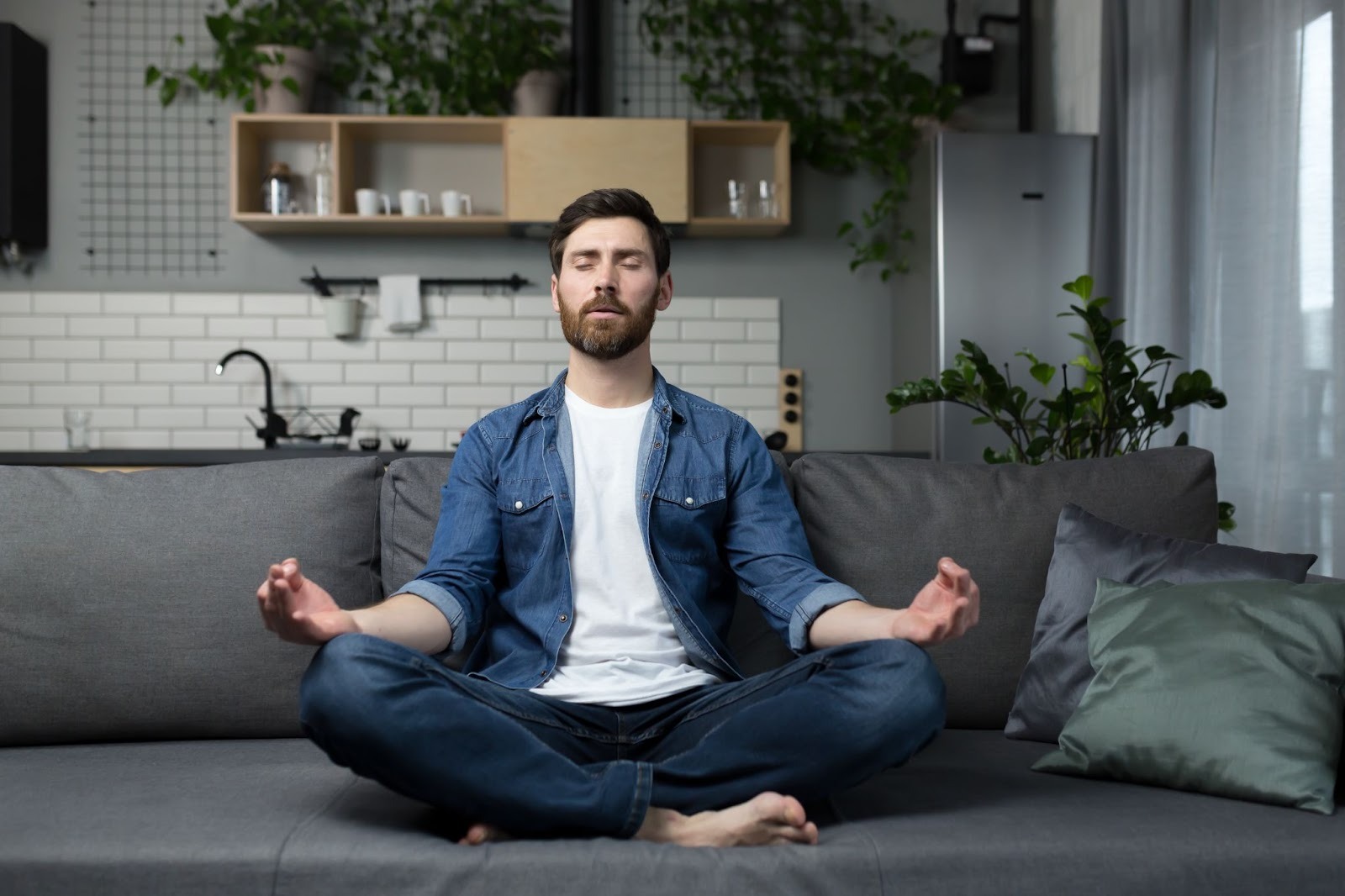



Most people find mindfulness meditation when they are looking for a way to feel less stressed. What they discover, if they stay with it long enough, is something far more significant than a relaxation technique. Daily mindfulness meditation does not deliver its most meaningful benefits in a single session. The gains are cumulative. They show up in how you respond to a difficult conversation, how quickly you recover after a hard day, and how clearly you think when things get complicated. This post moves past the surface-level benefits most mindfulness articles recycle and examines what consistent daily practice actually produces across your mental, emotional, physical, and relational life.
What Makes Daily Practice Different From Occasional Meditation
There is a meaningful difference between using meditation as a stress relief tool when things get difficult and maintaining a daily practice that gradually reshapes how you function. Occasional meditation produces temporary states of calm. Daily mindfulness meditation produces something more durable: lasting changes in how you characteristically respond to experience. Researchers call this trait change rather than state change, and that distinction matters enormously for understanding why consistency is the mechanism behind the results.
The biological foundation is neuroplasticity. The brain changes structurally with consistent meditation in ways that irregular sessions do not produce. Research from Harvard and the Max Planck Institute has documented measurable increases in gray matter density in regions associated with attention and emotional regulation among practitioners who maintained daily practice for eight weeks or more. Missing one session matters far less than maintaining the overall pattern. The brain responds to what you do repeatedly, not to what you do occasionally.
Mental Clarity and Cognitive Performance
Attention and Focus
Daily mindfulness meditation is increasingly recognized as a cognitive performance tool, not just a wellness practice. The core mechanism is straightforward. Meditation trains sustained attention by repeatedly redirecting a wandering mind back to a chosen focal point. This is a literal neurological exercise that strengthens the prefrontal cortex regions responsible for attentional control. Research consistently shows that consistent practitioners demonstrate improvements in sustained attention tasks and significant reductions in mind-wandering frequency compared to non-meditators. In a world designed to fragment attention, that capacity becomes genuinely valuable.
Working Memory and Decision Making
Mindfulness meditation supports working memory by reducing the cognitive load imposed by rumination and mental noise. When that noise quiets, there is more room for clear thinking and better decisions under pressure. Experienced meditators process information differently in high-stress situations, relying less on reactive thinking and more on deliberate reasoning. Cognitive neuroscience research has documented these differences consistently, and the findings favor those with regular mindfulness meditation practice across a range of demanding cognitive tasks.
Emotional Regulation and Resilience
The Gap Between Stimulus and Response
One of the most practically significant things daily mindfulness meditation develops is the space between an emotional trigger and the behavioral response to it. Practitioners demonstrate a measurable increase in the time between experiencing a stimulus and acting on it. That sounds subtle until you consider how many relationships and decisions are shaped by reactions that happen in that brief interval. This quality is not emotional detachment. It is full awareness of what you are feeling, combined with the genuine capacity to choose what you do next.
Processing Difficult Emotions Without Avoidance
Consistent practice also develops the capacity to sit with difficult emotions without immediately acting on them or pushing them away. Meditation teaches practitioners to observe difficult emotional states with curiosity rather than alarm. This is different from ruminating. Rumination circles around pain and amplifies it. Mindful observation acknowledges it and allows it to move through. That distinction, learned through direct experience rather than conceptual understanding, is one of the most genuinely transformative things a daily mindfulness meditation practice produces over time.
Stress Reduction and the Nervous System
The stress reduction benefits of mindfulness meditation are the most widely discussed and the most rigorously researched. The physiological mechanism is the activation of the parasympathetic nervous system, which counteracts the chronic low-grade stress response underlying many modern health problems. Practitioners demonstrate lower baseline cortisol levels and faster cortisol recovery following stressful events compared to people who do not meditate. Cortisol drives inflammation, and chronic inflammation is implicated in cardiovascular disease and accelerated aging.
Jon Kabat-Zinn’s Mindfulness-Based Stress Reduction program has generated decades of clinical research documenting these physiological effects. What the research consistently shows is that stress reduction through mindfulness meditation is more durable than stress reduction through distraction because meditation addresses the cognitive patterns generating stress rather than temporarily interrupting them.
Physical Health Benefits Backed by Research
Cardiovascular and Immune System Effects
Clinical research has documented measurable effects of regular mindfulness meditation on cardiovascular health, with practitioners showing reduced blood pressure and improved heart rate variability. Immune function has also been studied, with findings pointing to measurable changes in immune markers among meditators. The connecting thread is inflammation. Chronic psychological stress drives chronic physiological inflammation, and mindfulness meditation interrupts that process at the cognitive level, which is why its effects show up in physical health measures that seem unrelated to a sitting practice.
Sleep Quality and Pain Perception
Mindfulness meditation improves sleep quality not by forcing relaxation but by quieting the rumination that prevents sleep onset. Most people who struggle with sleep cannot stop thinking long enough to let it happen. A consistent meditation practice trains exactly the capacity needed to release mental activity at the end of the day. Research on mindfulness-based approaches to chronic pain management has also produced striking findings. Meditation does not eliminate pain signals but measurably changes the practitioner’s relationship to pain experience, reducing suffering and functional limitation in ways that have real implications for quality of life.
Managing Anxiety and Depressive Symptoms
Mindfulness meditation has moved from an alternative wellness practice to a clinical recommendation for anxiety and depression. Mindfulness-Based Cognitive Therapy is now clinically validated for recurrent depression and recommended by major health organizations, including the UK’s National Institute for Health and Care Excellence. What makes it effective is that it addresses the rumination patterns sustaining both anxiety and depression rather than managing surface symptoms. Research has shown comparable outcomes between MBCT and antidepressant medication for preventing depressive relapse in some populations.
It is worth being honest here. Mindfulness meditation supports mental health and has strong evidence behind it. It is not a replacement for professional treatment in clinical presentations of anxiety and depression. For many people, it works best as a complement to professional care rather than a standalone intervention.
Building a Daily Practice That Actually Sustains
Understanding the benefits of mindfulness meditation is far easier than building the practice that delivers them. The research on habit formation is detailed: small, consistent sessions outperform long, irregular ones for producing lasting change. Ten minutes every morning is more valuable than an hour on weekends when you remember. The most common obstacles are mental resistance, perceived lack of time, and frustration with a wandering mind. None of these is a reason to stop. They are the practice itself.
Final Thought
Daily mindfulness meditation does not promise an overnight transformation. What it offers is more reliable: a gradual, compounding shift in how you think, feel, and respond to the people and situations in your life. The research behind these benefits is substantial and still growing. But research only points toward what direct experience confirms for those who maintain consistent practice long enough to feel the difference. That difference is what mindfulness meditation is really about, and it is available to anyone willing to show up for it one day at a time.