


Stress is not going away. The goal was never to eliminate it. The goal is to build a reliable set of responses that keep it from running your life. Natural stress relief techniques work not because they are trendy but because they engage the body’s own regulatory systems in ways that produce real, measurable changes. Breathing, movement, sleep, nutrition, and mindset practices all have documented physiological effects on how your nervous system handles and recovers from stress. This article covers the most practical and research-backed approaches, the kind you can actually build into daily life rather than save for a crisis.
Understanding What Stress Actually Does to Your Body
Most people know stress feels bad. Fewer understand what it is actually doing inside the body, and that understanding matters because it changes how you approach relief. When your brain perceives a threat, real or imagined, it activates the hypothalamic-pituitary-adrenal axis, which floods the body with cortisol and adrenaline. Heart rate climbs. Digestion slows. Immune function dips. This system was designed for short bursts of danger, not the low-grade, persistent pressure that most people carry around every day.
Chronic stress keeps this system switched on far longer than it was built to handle. The result is elevated cortisol, disrupted sleep, increased inflammation, and a nervous system that never fully recovers between demands. Willpower alone cannot fix this. Your body needs specific physiological inputs to shift out of stress mode, which is exactly why deliberate stress relief techniques matter more than simply trying harder to relax.
Breathing Techniques That Calm the Nervous System Fast
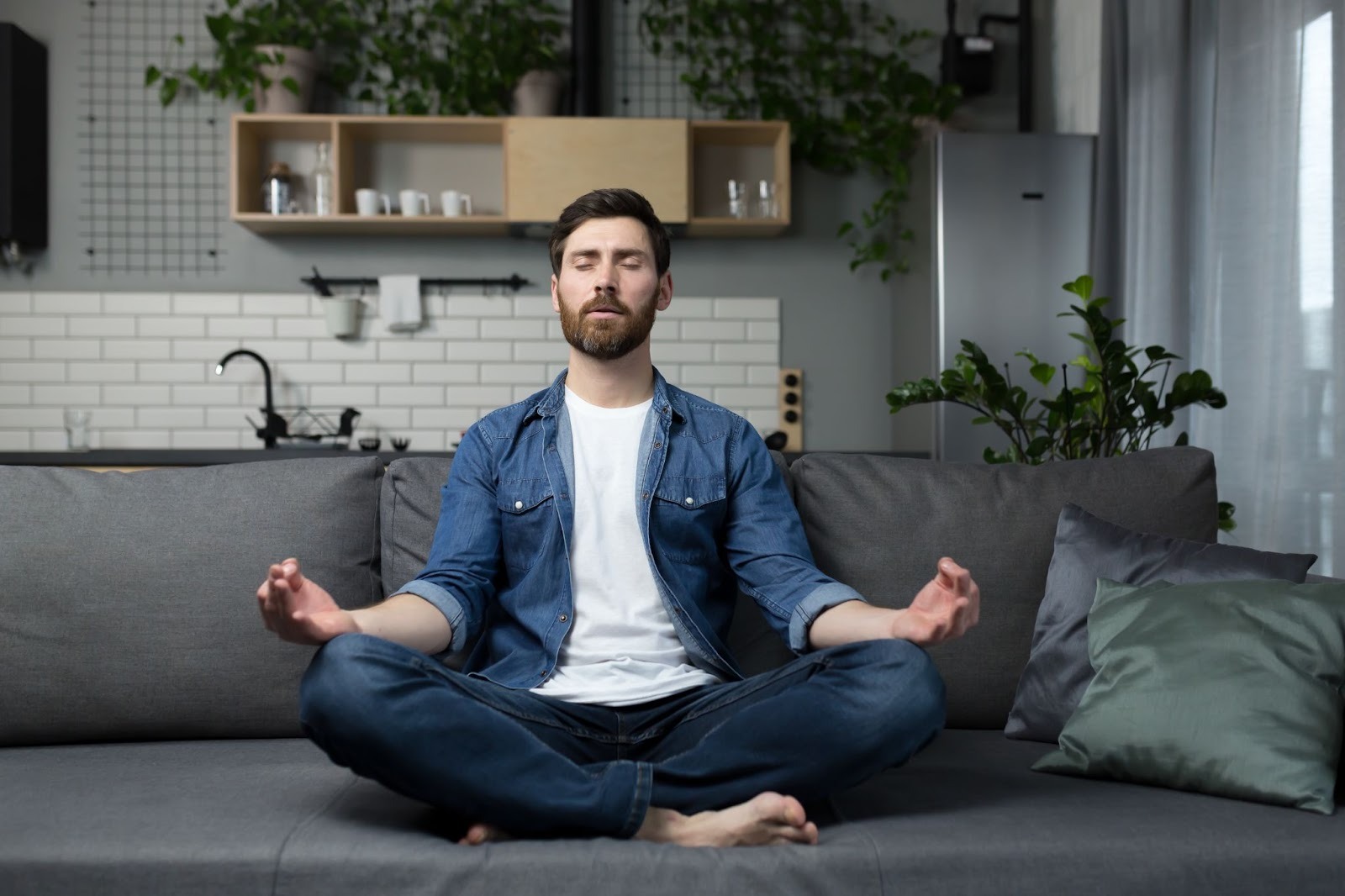
Breathing is the most immediately accessible tool you have. No equipment, no schedule, no special location required. The reason it works so quickly is physiological. Slow, controlled breathing stimulates the vagus nerve through diaphragmatic expansion, which activates the parasympathetic nervous system and pulls the body out of the stress response.
Diaphragmatic Breathing
Most adults under stress default to shallow chest breathing, which actually keeps the nervous system in an elevated state. Diaphragmatic breathing corrects this. Inhale slowly through the nose and let your belly expand rather than your chest. Exhale slowly through the mouth and let the belly fall. Even five minutes of this practice each morning begins to shift baseline nervous system tone over time. The technique is simple, but the physiological effect is genuine and well-documented.
Physical Movement as a Primary Stress Relief Tool
Exercise is one of the most well-researched natural stress relief techniques available, and it works on multiple levels simultaneously. Regular aerobic movement reduces baseline cortisol, speeds up stress recovery, and produces endorphins that directly shift the neurochemical environment that chronic stress creates. Moderate consistent activity, a daily walk, a regular swim, and a cycling routine, outperforms occasional intense sessions for nervous system regulation. The body responds better to frequency than to intensity when stress management is the goal.
Yoga and Movement-Based Mindfulness
Yoga combines physical movement with breath regulation and present-moment attention, making it a dual-action approach that addresses both the body and the mind at the same time. Research consistently shows reductions in cortisol, anxiety, and improved heart rate variability in regular yoga practitioners.
The Role of Sleep in Stress Recovery
Sleep is not passive rest. It is the primary mechanism through which your body processes and recovers from the stress it accumulated during the day. When sleep is poor, cortisol rises, emotional reactivity increases, and the brain’s capacity to regulate the stress response the following day is measurably reduced. Chronic stress and poor sleep reinforce each other in a loop that gets harder to break the longer it runs.
The sleep hygiene practices with the strongest evidence behind them are also the simplest. Consistent sleep and wake times anchor your circadian rhythm. Morning light exposure within an hour of waking regulates cortisol and melatonin cycles. Keeping the bedroom cool and dark improves sleep architecture.
Nutrition and Stress: What You Eat Affects How You Feel
The connection between diet and stress is one of the most overlooked areas in stress management conversations. What you eat directly affects the hormonal and neurochemical environment in which your stress response operates every single day.
Foods That Support the Stress Response
Magnesium is widely deficient in modern diets and plays a direct role in nervous system regulation. Dark leafy greens, nuts, seeds, and legumes are practical sources worth prioritizing. Omega-3 fatty acids reduce the inflammation associated with chronic stress, and B vitamins support the neurotransmitter production that underlies mood and stress resilience. Stable blood sugar is also critical. Skipping meals or eating high-sugar foods creates blood sugar swings that trigger the stress response independently of whatever else is happening in your day.
What to Reduce or Avoid
Caffeine raises cortisol directly. For people already dealing with chronic stress, high caffeine intake keeps the nervous system in a state of low-level activation that makes genuine recovery harder. Alcohol is commonly used to manage stress, but it disrupts sleep architecture and worsens anxiety over time. Ultra-processed foods drive inflammation and negatively affect gut health, which influences mood and stress regulation through the gut-brain axis in ways that research is still mapping but consistently confirms.
Nature, Social Connection, and Environmental Stress Relief
Two of the most effective natural stress relief techniques are also two of the most underused. Time in natural environments and genuine face-to-face social connection both produce measurable physiological stress reduction, and neither requires a significant time commitment to be effective. Research on shinrin-yoku, the Japanese practice of forest bathing, has documented reductions in cortisol, blood pressure, and inflammatory markers after relatively short periods of time spent in natural settings. Even a park or a tree-lined street produces measurable effects compared to equivalent time in urban environments.
Social connection works through a different but equally real mechanism. Positive social interaction releases oxytocin, which directly counteracts cortisol and reduces the physiological stress response. The key distinction is between passive social media scrolling, which tends to increase stress, and active real-world or voice connection with people you trust.
Mindset Practices That Change How Stress Is Processed
How you interpret a stressful situation has a measurable effect on how your body responds to it. Research by Alia Crum at Stanford has shown that viewing stress as a performance-enhancing challenge rather than a threat produces a genuinely different hormonal profile. The same event, framed differently, creates a different physiological response. Cognitive reframing is the practice of deliberately examining whether your interpretation of a stressful situation is accurate and whether a different perspective is available. It takes practice, but it produces real results.
Gratitude Practice and Journaling
Robert Emmons’ research at UC Davis has consistently documented the stress-reducing effects of gratitude practice. People who write down a few specific things they are grateful for each day show measurable improvements in mood, stress levels, and sleep quality over time. Expressive journaling, writing freely about a stressful experience rather than trying to solve it, has been shown by researcher James Pennebaker to reduce both the psychological and physiological impact of stress over time.
Digital Boundaries and Sensory Stress Relief
Modern stress has contributors that earlier generations simply did not face. Heavy smartphone use, constant notifications, and passive social media consumption have all been linked to elevated cortisol, disrupted sleep, and increased anxiety. The dose-response relationship is clear: more screen time correlates with more stress symptoms, and reducing it consistently produces measurable relief. Practical boundaries that actually work include turning off non-essential notifications, creating phone-free periods during meals and the hour before bed, and being deliberate about when and why you pick up your phone rather than doing it automatically.
Building a Personal Stress Relief Routine
Individual techniques matter less than having a personal system that combines them consistently. A morning breathing practice, regular movement, a consistent sleep schedule, and one or two mindset practices layered in over time create compound benefits that no single technique can match on its own. Start with one practice that feels manageable and that fits your existing schedule.
Final Thought
The most resilient people are not the ones who never feel stressed. They are the ones who have built reliable systems for processing and recovering from stress efficiently. Natural stress relief techniques work because they address the actual physiological mechanisms behind stress rather than simply distracting from it. Choose one approach from this article, practice it consistently for two weeks, and then add another. That gradual, compounding approach is how stress management becomes a genuine skill rather than something you only reach for when things get bad.
Frequently Asked Questions
Q1: What are the most effective natural stress relief techniques for immediate relief?
Diaphragmatic breathing and box breathing are among the fastest-acting natural stress relief techniques, producing measurable nervous system changes within minutes by directly activating the parasympathetic response.
Q2: How long does it take for natural stress relief techniques to show results?
Most natural stress relief techniques produce noticeable benefits within two to four weeks of consistent daily practice, with bigger physiological changes like reduced baseline cortisol developing over eight to twelve weeks.
Q3: Can natural stress relief techniques replace medication for anxiety?
Natural stress relief techniques support mental health effectively, but are not a replacement for professional treatment for clinical anxiety. They work best alongside professional guidance rather than as a standalone alternative to prescribed care.